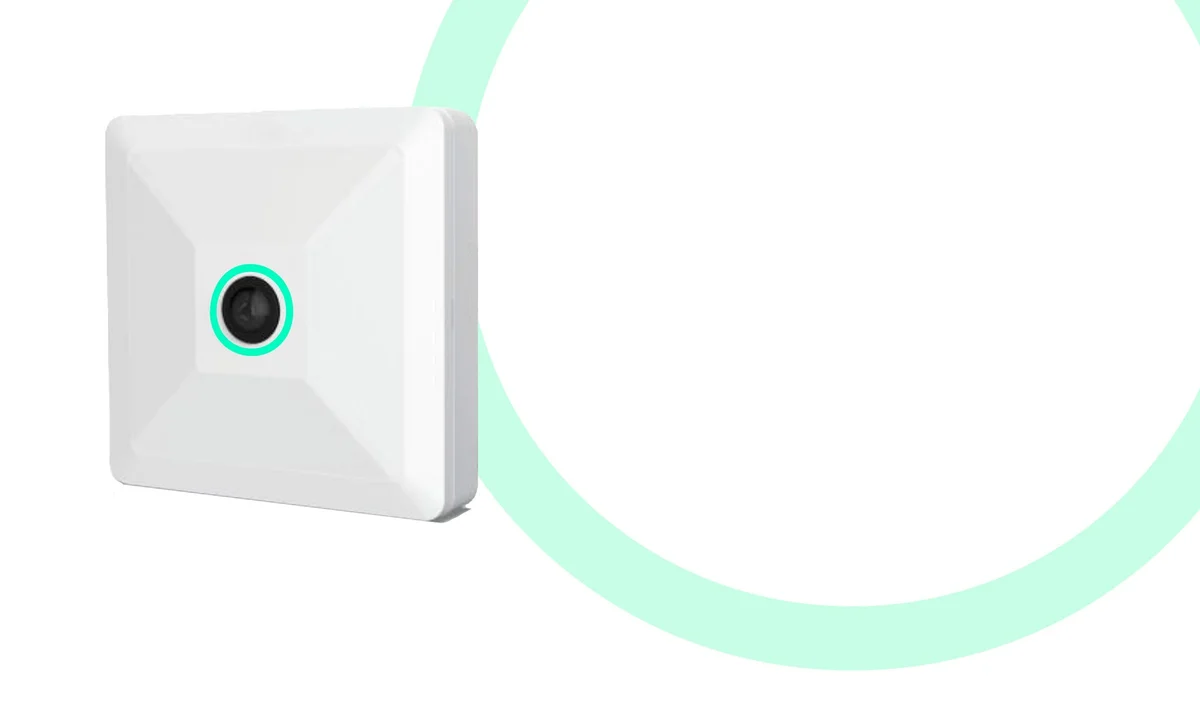
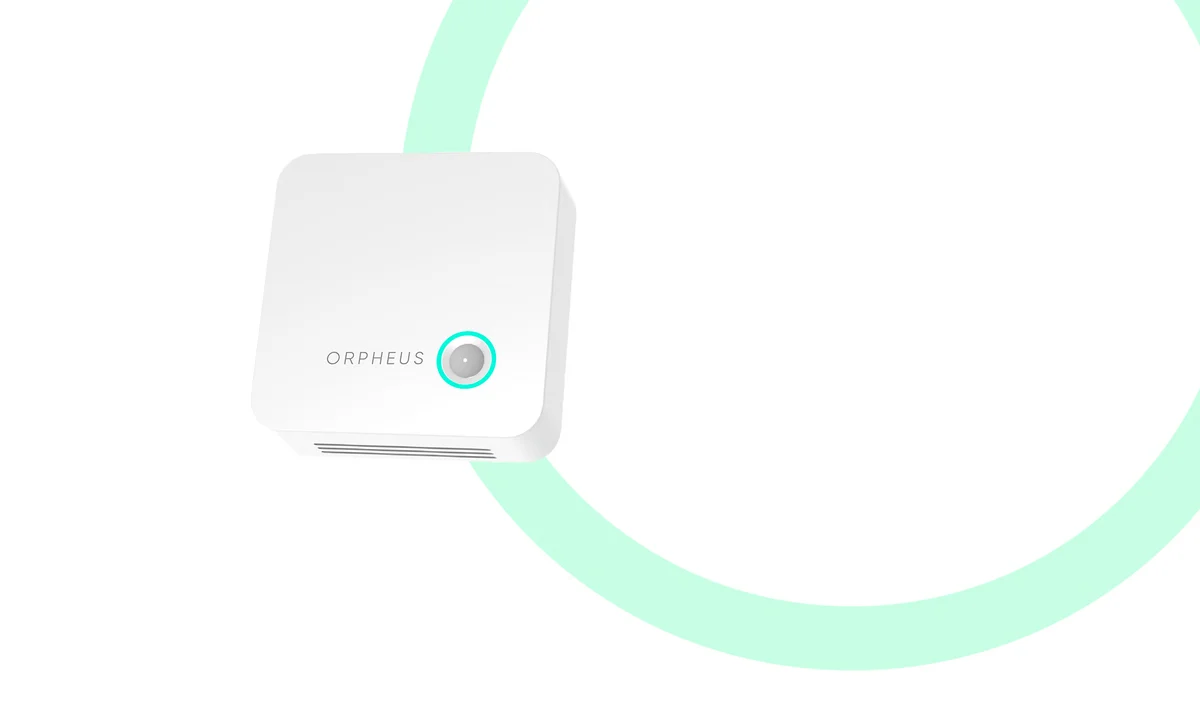
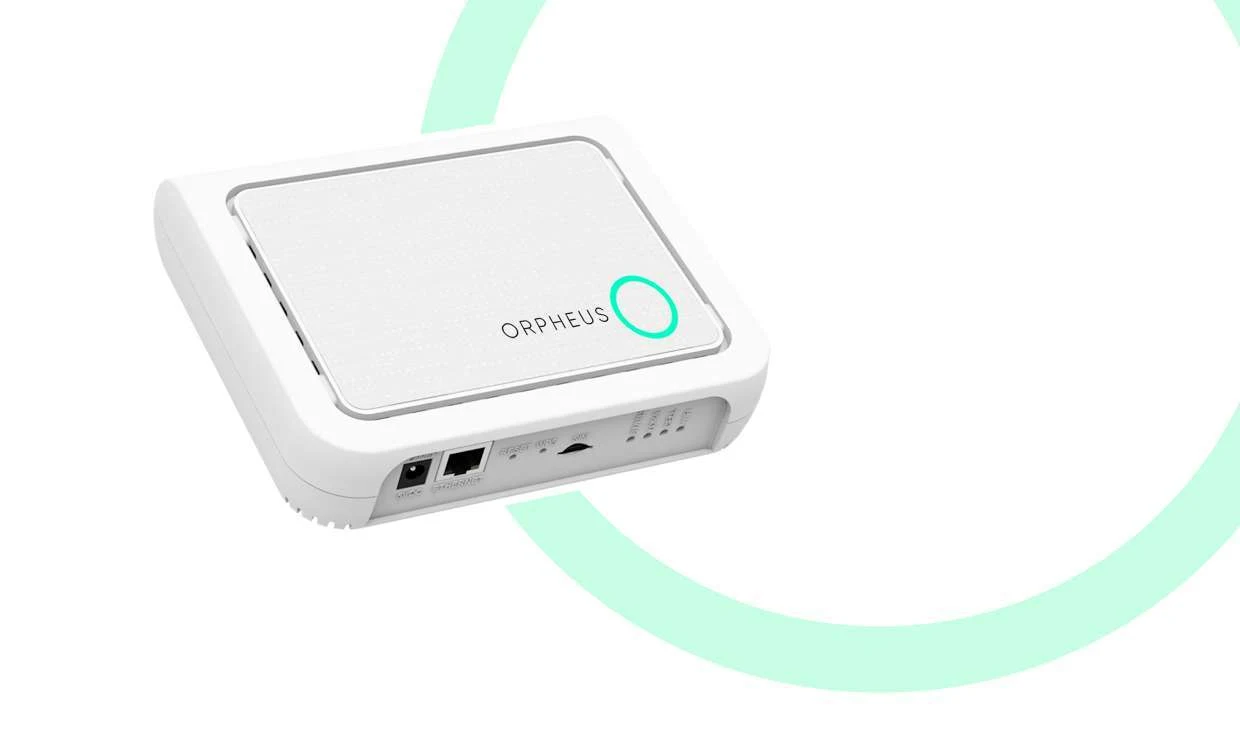
Presence detector (PIR)
Is anyone there?
In rooms and small zones, on the ceiling or wall.
Misses: How many people there are. And it can miss someone who stays still for a long time.
In Orpheus: The presence sensor in Meet rooms.
Sensors
They don’t all answer the same question. Some tell you whether anyone is there; others, how many people; others, how it feels. Here’s how to choose, based on what you want to decide.
By Carles Morales, founder of Orpheus ·
The types
Presence detector (PIR)
In rooms and small zones, on the ceiling or wall.
Misses: How many people there are. And it can miss someone who stays still for a long time.
In Orpheus: The presence sensor in Meet rooms.
Under-desk sensor
One on every desk.
Misses: What happens away from the desk: rooms, common areas, people standing. And it’s a lot of devices to maintain.
In Orpheus: We don’t use it: one ceiling counter covers a whole zone.
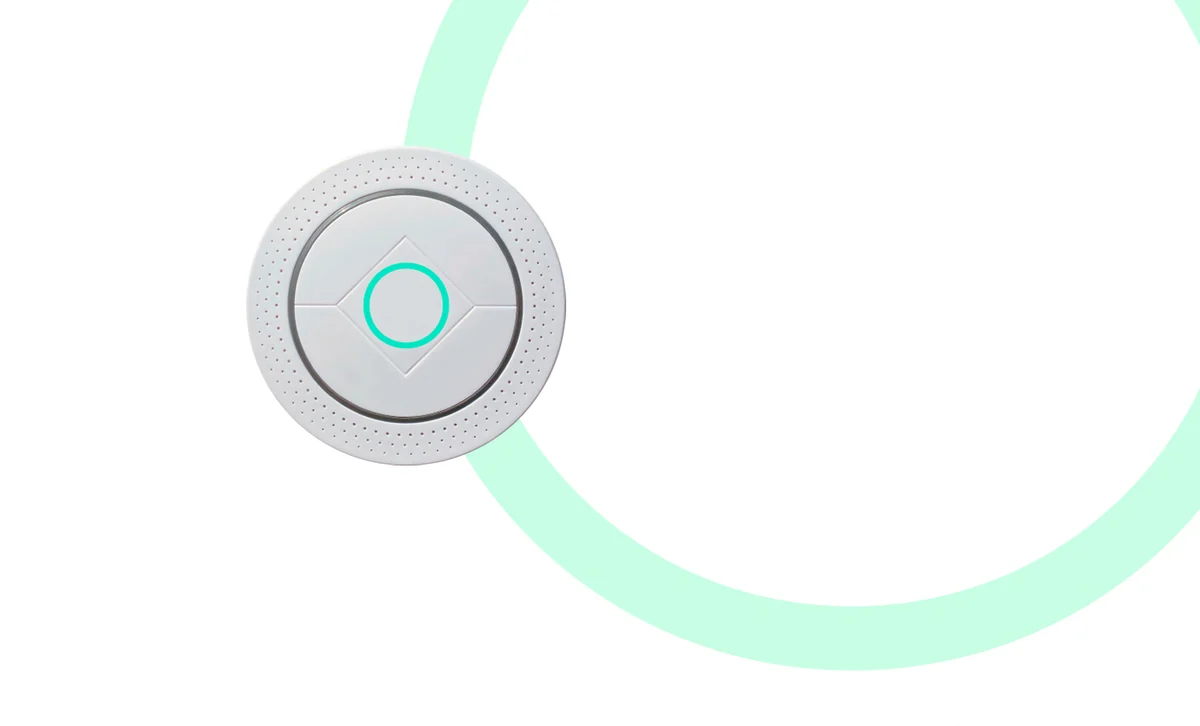
People counter (ceiling)
On the ceiling, roughly one every 70 m².
Misses: What happens outside its zone, which is why they’re spread across the floor.
In Orpheus: CountSensor: counts with AI inside the device and only sends numbers, no images.
Entry counter (doorways)
At doorways: the building, a floor or the canteen.
Misses: Where people are once inside, and how long they stay.
In Orpheus: The canteen counters in Cafe.
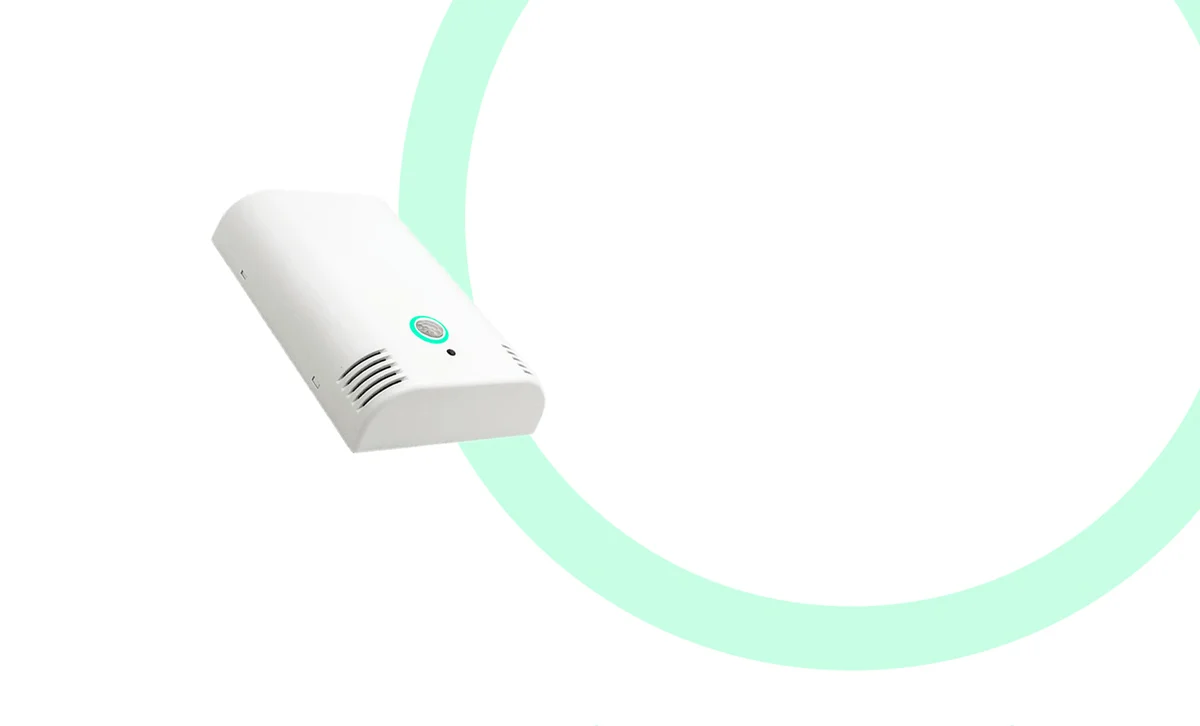
Environmental sensor
On the wall, one per zone.
Misses: How many people there are. That’s why it’s paired with the others: comfort depends on occupancy.
In Orpheus: MultiSensor, MultiSensor+ and WellSensor: temperature, humidity, CO₂, noise, light and more.
Wifi and badge data
They’re already on your network and turnstiles: nothing to install.
Misses: Where each person is and for how long. One person carries two or three devices, and three people can walk in on one badge.
In Orpheus: We don’t use them to measure occupancy.
How to choose
Get more info
Leave your name and email and we’ll tell you which sensors fit, where they’d go and when you’d have the first data.
How many
It depends on each floor’s shape and what’s in the way. We work it out with you on the floor plan.
Gear
They count people and measure how each space feels, with no building work and nothing touching your network. The Hub sends it all to Space over the mobile network.
Get more info
Leave your name and email and we’ll help you choose the sensors for your building.
The good cookies are in the office kitchen. These are third-party analytics ones, only if you’re OK with it.